
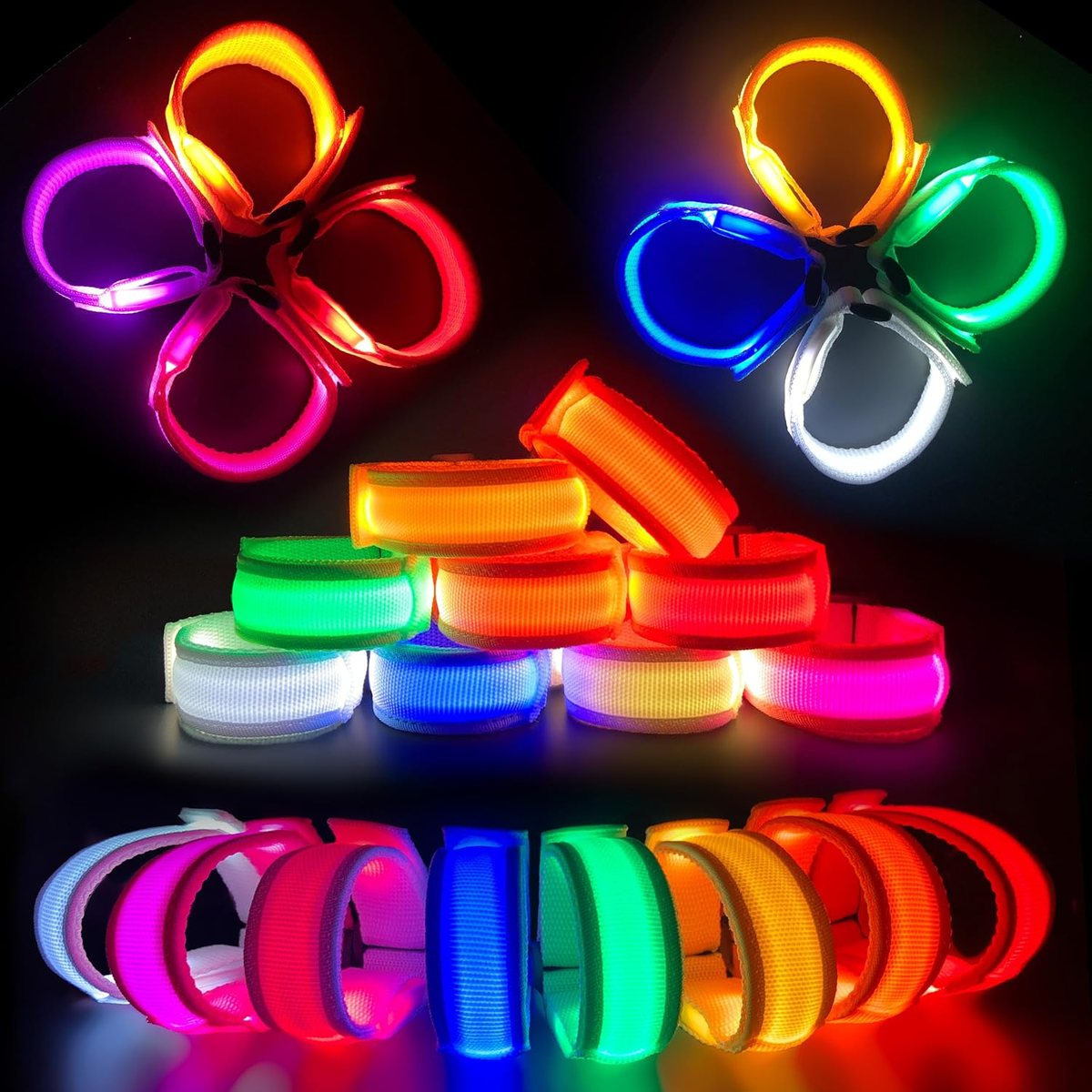
FANL Twenty-Four Band Crowd Set
$36.99
24 bands and 24 spare CR2032 cells · In stock

Every set ships with its cells fitted and one spare per band
Field notes
One button, three modes, no sequence to learn. Here is what each setting actually does and when we reach for it.
There is a single moulded button on the outside of every band we make. Press it once to wake the light, press it again to change what the light is doing, keep pressing and you come back to where you started. There is no long press, no double tap and no combination that gets a band stuck in a state you cannot leave. We have watched six-year-olds work it out without being told, which is the only usability test that has ever mattered to us.
Steady holds one constant line of light along the band. It is the mode that runs longest, roughly fifteen to twenty hours on the cells that arrive fitted, and it is the one to use whenever the job is being visible rather than being noticed. Walking a dog, crossing a car park, keeping a group together on a pavement: all steady. It is also the mode that photographs cleanly, because a camera shutter will catch a flashing band mid-dark and give you a picture of an unlit strap.
Fast flash pulses several times a second. At distance the eye stops reading it as a light and starts reading it as movement, which is exactly what you want in a stand when something happens on the pitch, or on a dance floor at the moment the music changes. It is the mode that drains a cell quickest in wall-clock terms per hour of attention, though because the light is off for part of every cycle it still outlasts steady by a margin.
Slow flash breathes rather than blinks, roughly one pulse a second. Across a long table it does the job a string of hanging bulbs does, and across a stand it photographs as a warm moving band instead of a flat wash. If a set is being worn for hours and nobody needs to be found urgently, this is the setting we leave them on.
The black bands in our mixed sets do not hold a colour, so their modes work differently. They offer a fast white flash and multicolour effects rather than a single steady shade. This is why they end up on the captain, the host or the photographer: they are visually distinct from every solid band in the room without anybody having to explain the rule.
Our rule of thumb is three words long. Safety means steady. Attention means fast. Atmosphere means slow. Nearly every situation a band ends up in falls into one of those three, and because every band is controlled on its own wrist, nothing stops a group from running all three at once when the room calls for it.
Please remember that each bracelet is its own controller — no remote, no sound trigger — and that the security a lit wrist gives you at an event is about being countable, not about being protected on a road. Keep spare cells out of reach and supervise children while they wear a band.
Two coin cells at the clasp power an LED strip running inside a woven band. The button on the outside switches the strip between steady, fast flash and slow flash. There is nothing to charge and nothing to pair.
Yes. Switch it off with the same button, store it with its spare cell, and it comes out of the drawer working. The band itself has no consumable parts beyond the battery.
Because they put light on a person rather than in their hand. A torch gets put down and a phone gets a flat battery, but a band stays fastened and keeps working for the whole evening.
Every band on this site, in every box.
$36.99
24 bands and 24 spare CR2032 cells · In stock
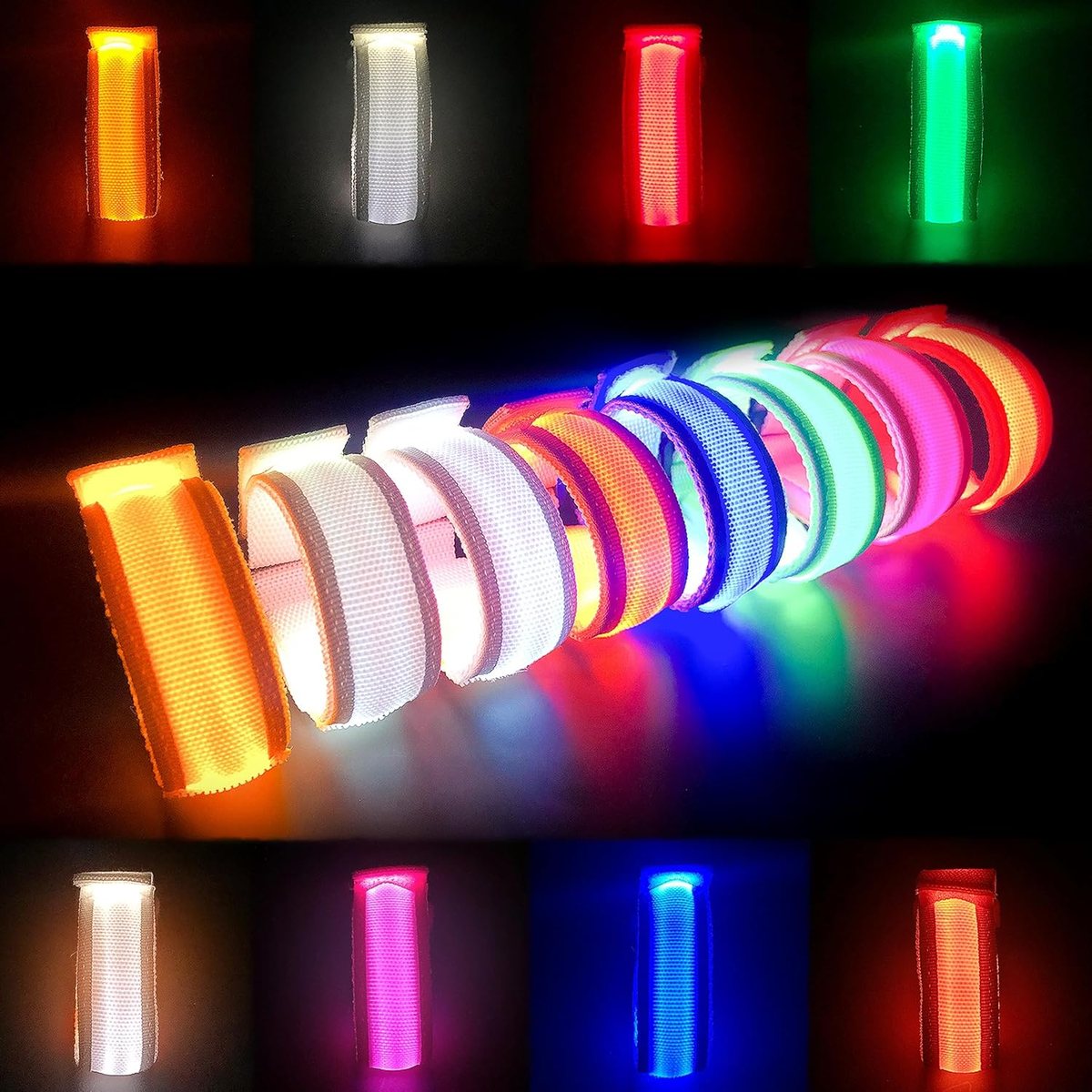
$14.39$15.99
8 bands and 8 spare CR2032 cells · In stock
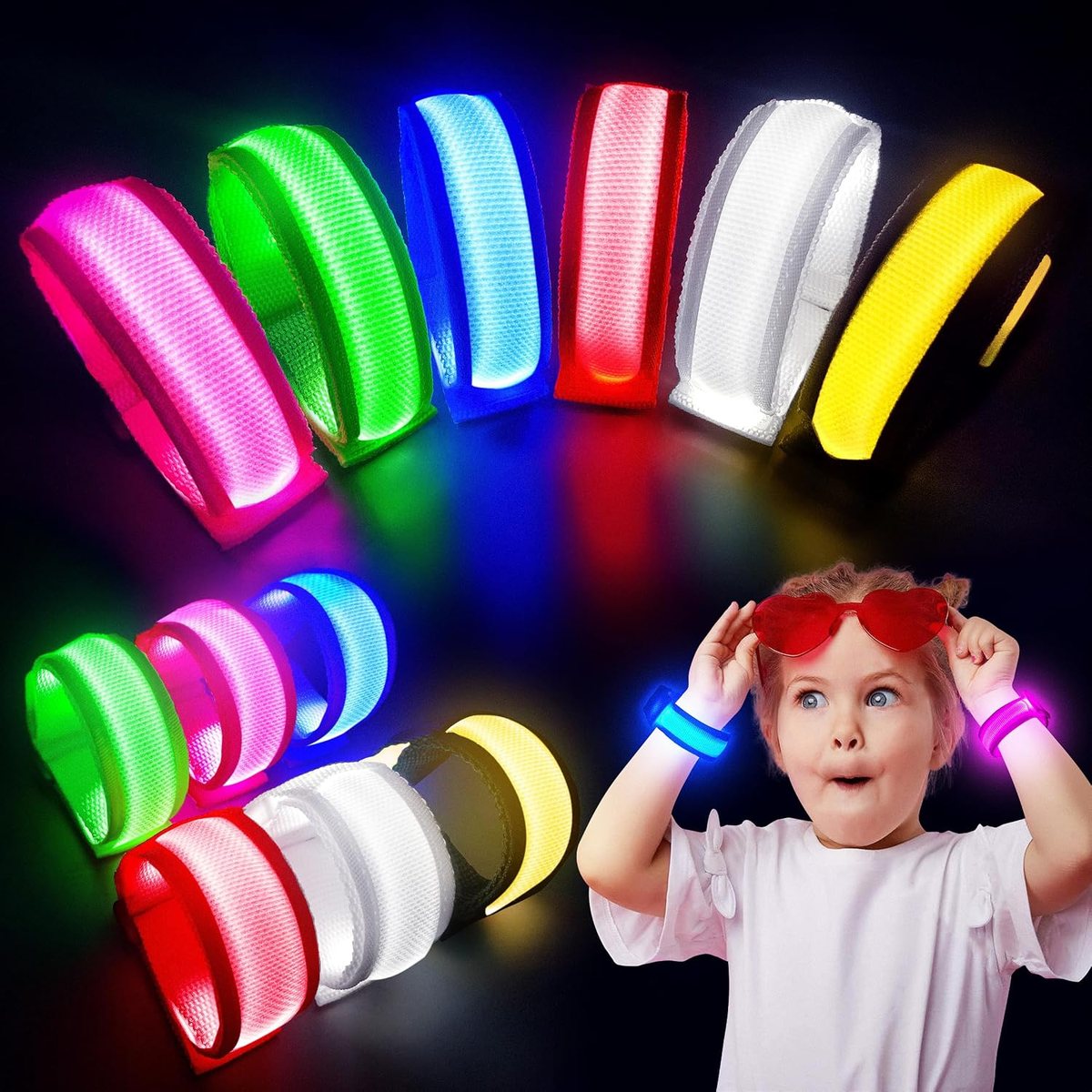
$18.89$20.99
12 bands and 12 spare CR2032 cells · In stock
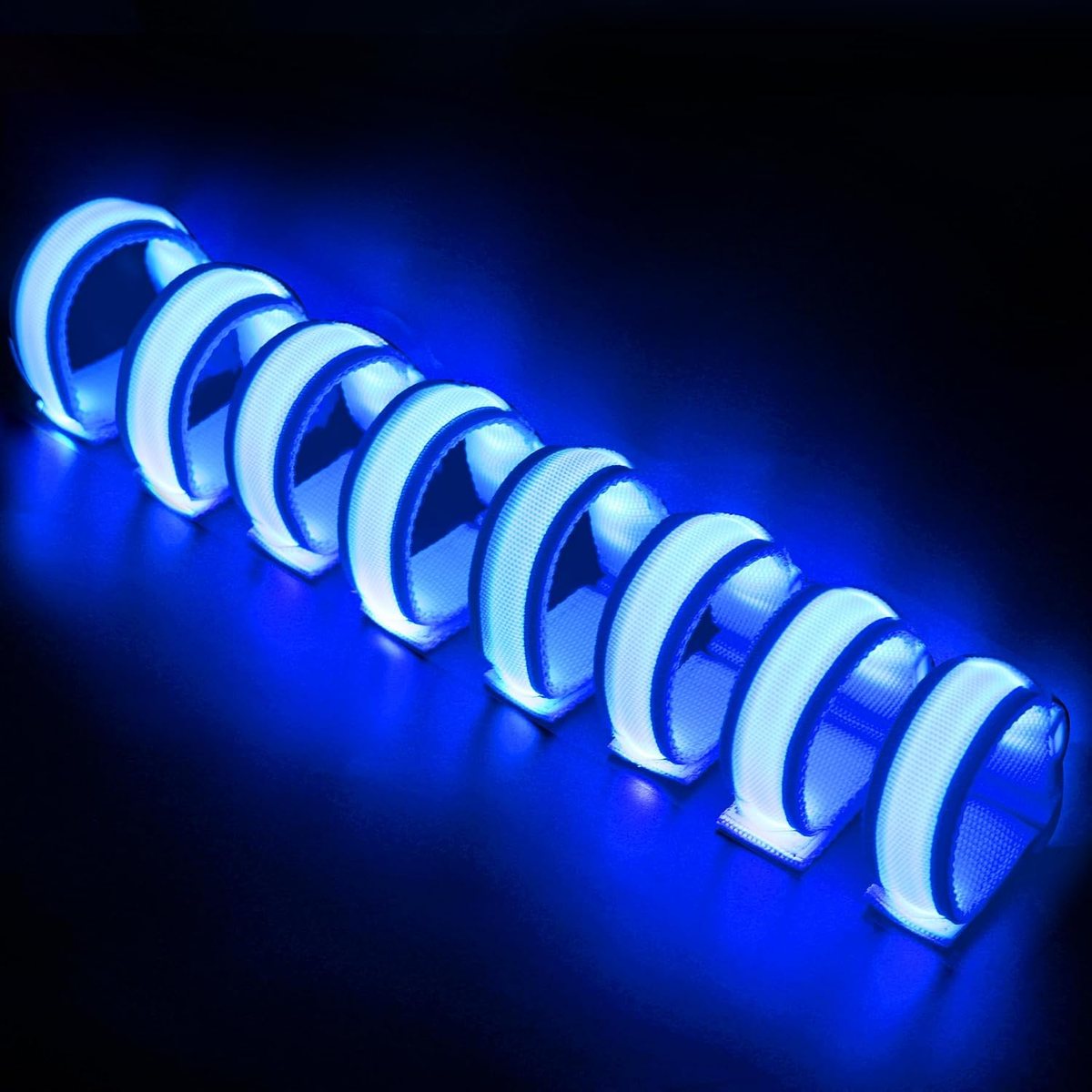
$15.29$16.99
8 blue bands and 8 spare CR2032 cells · In stock